Thursday Travel Photography #1 – An introduction + Asking permission to shoot people
Starting today, India Travel Blog will feature a column on Travel Photography every Thursday. This column aims to help amateurs as well as keenly interested readers to hone their photography skills, and enable them to take better pictures when travelling. Besides providing simple, helpful tips on getting good pictures, we will also touch on simplest post processing techniques, managing images and other aspects that needs to be addressed after taking a picture. We will also feature a way to have one or two images critiqued every week, and one or two questions from the readers answered. Welcome to the column – ‘Thursday Travel Photography’. Comments and feedback welcome.
I posted a short write up on ‘10 tips to get good images‘ on Club Mahindra Blog a fortnight ago. This week, I was hoping to take up each of these 10 tips and explain in depth about how to get the best from it, using examples. When I was looking back at the write-up today, a comment from Kalyan caught my attention. He said:
“…I get scared of the 3rd tip [about shooting people]. I mean ’shooting’ children is easy but adult strangers! I get too jittery to ask. Hope you write another post on – 7 tips on how to ask ‘May I click your photograph’?”
Let’s talk about this in today’s column.
There are two lines of thinking about getting permission from people when taking photographs.
First, that it is important to take permission before taking pictures. By shooting a person without taking his or her permission, we would be invading their privacy, and it is not right to take a picture against their wish.
Second, that a good image can’t be shot when you request for permission. You may be denied permission in the first place. And even if you are allowed to, you still can’t get a candid image of the person being photographed. He or she becomes conscious of the photographer and the mood of the moment will be gone.
It is difficult to deny both streams of thought. It is important to respect someone’s privacy, and at the same time it would nice to catch the mood of the moment perfectly. Every photographer will have his own views on this, and it is hard to say which is right. Personally I follow a middle ground between the two and choose my action depending on my location, and general attitude of people about being photographed by strangers. While I find it important to respect someone’s privacy, I do go ahead and shoot without asking in places where I find it likely that people are not apprehensive about their picture taken.
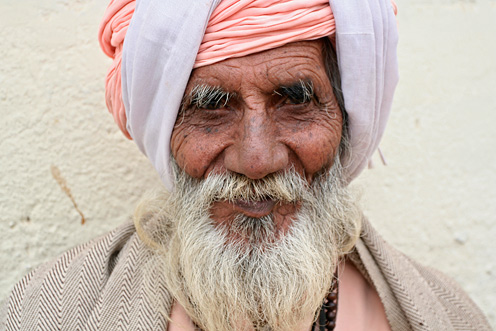
I asked this baba’s permission before taking his picture. He was glad to consent, but as soon as I asked him, he became conscious. He was casually chatting with people around him, but suddenly stopped, adjusted his headgear and posed for the camera stiffly. The mood of the moment was gone.
Women in mountain regions of India(such as Himachal, Sikkim, Arunachal) prefer not to be photographed by tourists, and shy away when they see a camera pointed at them. People from globalized societies, such as in big cities, or most people who are aligned with modern ways of living prefer not to be photographed from strangers. However, as you go into smaller places, people are likely to be more open and do not get disturbed by photographers. Some may even be delighted to get photographed, and will be glad to pose for the camera.
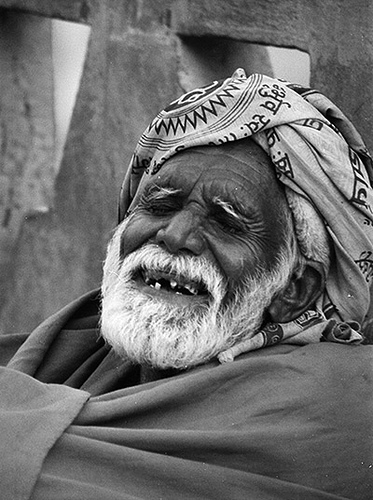
I did not ask him for permission to shoot. But I was standing in front of him not very far away, and he was well aware that I was shooting him. I spent a few minutes wandering in the area before getting this picture.
I avoid photographing people altogether in the first case where people are apprehensive to getting photographed. There would be a few occasions when a great photo-opportunity would have made me break this self-imposed rule, but I have always regretted it more than having enjoyed the process. When I was travelling in the tribal village of Dha and Hanu in the Indus Valley of Ladakh, elderly women frequently asked for money to get photographed. Since I was not keen to pay, I avoided taking pictures but could not resist in some occasions when I saw them walking in front of me wearing their tribal clothing. I requested a lady to pose for a photograph, and she consented, but asked for some money after the picture was taken. I politely refused and moved on, and she did not seem to mind much. But when I took a picture of another lady a little later even as she was far from me, this time without asking for permission, she was clearly upset and did not hide her disapproval. She asked for money, and was not happy when I refused. I managed to get away, but felt guilty about having taken the picture without her approval and deleted it soon after.
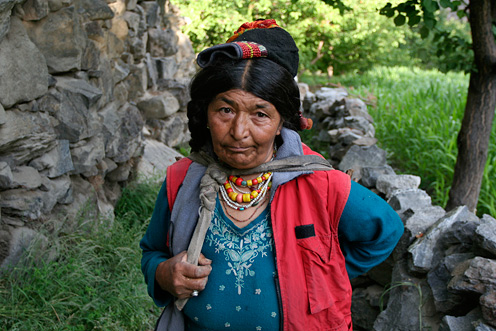
This lady from Dha Village agreed to be photographed. But another lady I met after her was unhappy about her picture being taken without her consent. I deleted that image.
While I tried taking pictures in Dha-Hanu, in many such occasions when I have seen people unwilling to pose either due to privacy concerns or for any other reasons, I have resisted the temptation to shoot. I rarely shoot people in areas of cities where people may not be keen to get photographed, and have let go some good opportunities on realizing that people may not be keen to get framed. But if people are not a prominent part of the scene, I do not have two minds about going ahead with my shot.
At the same time, I have taken some additional measures to get a picture when I really wanted it. Driving through Himachal’s Kinnaur Valley, we saw two beautiful women walking by, wearing traditional caps and necklaces on the way. Knowing that they would never be willing to get photographed, we requested our driver – a talkative person who knew the way of locals, to talk to them and ask for their consent. He did manage to get their permissions and we quickly took a few shots. In another incident, I was keen to get images of a woman weaving a jasmine necklace in Madurai, who asked for some money to be photographed. This time, I obliged and paid her to take a picture.
In places where people usually do not mind being photographed, such as in rural areas, in parts of Rajasthan or Ladakh, I have simply gone ahead and photographed people without asking their consent. I must admit that the best of my people images comes from such places, but I also feel that it is not right to go out of way to get those best shots. In such occasions, while I don’t make it obvious about taking their pictures, I consciously avoid hiding from them as I shoot.
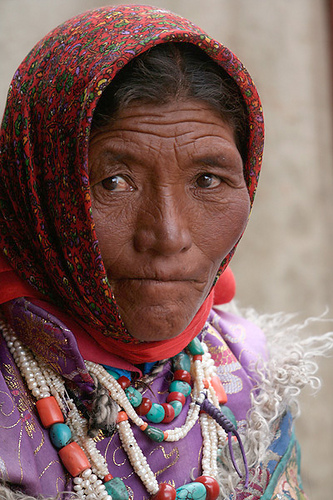
I shot this picture during a festival in a monastery in Ladakh. There were a large number of photographer-tourists around me taking her picture. She was well aware that she was being photographed. While it is impossible to say if she was okay about being photographed, she did not appear upset about it, nor did she disapprove.
When you do ask for permission to shoot, talk to them casually and spend time with the person you are shooting and make them comfortable first. Take a few sample images initially, until they start getting used to the camera, or ignore it altogether. It is then possible to take images of the person without getting him or her conscious. It is much easier with kids who become friendly quickly and will be happy to be good subjects for the camera. I usually try talking to children who eventually become comfortable and do not remain conscious of the camera for long.
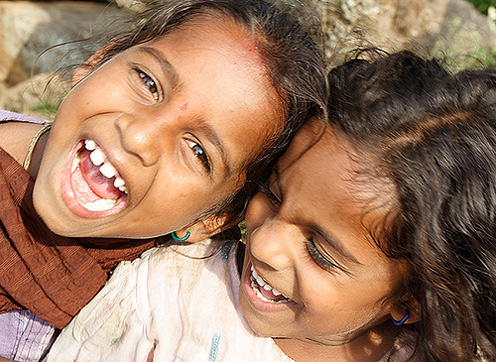
It is easy to break the ice with children.
To conclude, I don’t think there is an easy and perfect solution to the problems of shooting people. At the same time it is important not to break into anyone’s privacy and go out of the way to get the best shot. When you do ask for permission, spend time to break the ice before getting your picture.