India Travel Blog


Blog Home    |    All Destinations    |    Image Gallery    |    Paintedstork home    |    About    |    Contact

A broken camera and a short circuited journey

March 20, 2009

It must have been more than two years ago that I made my last photography trip. It was a solo drive to Chikmaglur to shoot kurinji flowers and landscapes. In the two or three days I spent in the hills around the town, I shot many pictures and came back satisfied, having made some images that stood to my expectation. Not often do I get to feel so.

Since then, every journey I made was primarily to travel and see places and experience something new. The camera was there in my hands in all these journeys, but photography only supplemented the travel and never overpowered the senses. All these journeys have been memorable, in terms of seeing and experiencing the pulse of a new place, its people, culture and landscapes. But they also left me longing, as they left much room for the photographer in me to do better.

It is this longing that prompted me to take the trip to Kasargod and spend five days photographing the colorful Theyyams of North Kerala. Having done my homework with dates and venues of performances, I set off on the Bullet Thunderbird for a 4-5 days photography extravaganza, and to follow it up with a few days in the hills to shoot landscapes. I opted to ride instead of the usually preferred bus journey, which would give me freedom of movement and allow me to be at a location of choice in early morning and late evening hours.

Despite my apprehension to large bikes, the journey went smooth and trouble free, without tiring me much as the wheels rolled on the road for long hours. Reaching Kasargod well in advance, I gathered necessary information by speaking to the secretary of local tourism promotion council and planning my days ahead.

The first morning went smoothly, photographing a Theyyam at Trikannad Temple near Bekal fort, a fifteen minute drive from Kasargod. I spent some time taking pictures, and more time watching the first Theyyam performance I was seeing ever. The highlight of the day was bumping into Tewfic El Sawy, a friendly and approachable travel photographer who was leading a team of photographers to document Theyyams of Malabar. I shot very few images, and hoped to spend increasingly more time shooting the performances in the next four days.

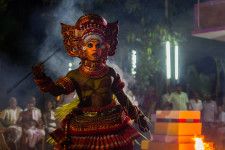
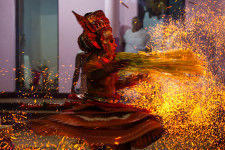
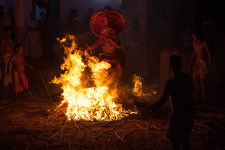
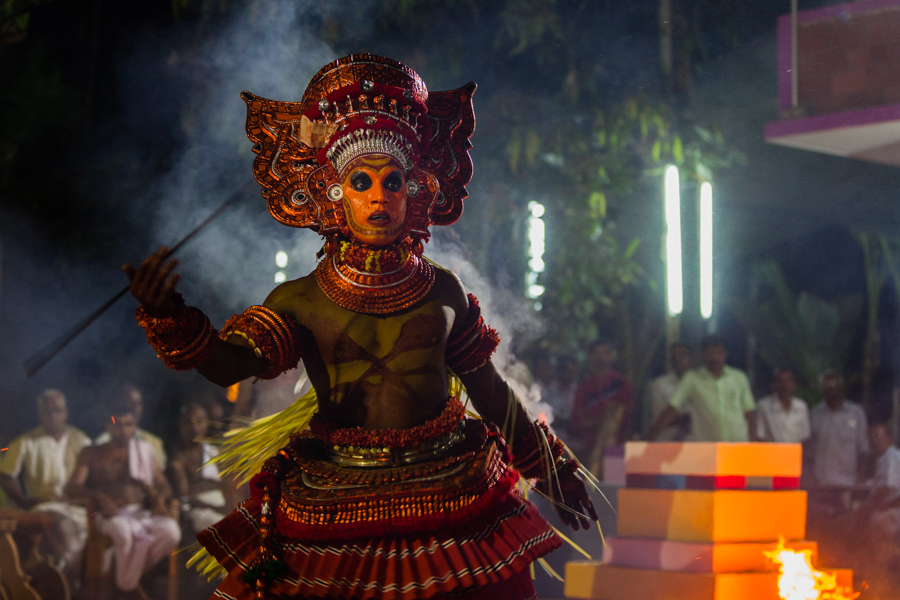
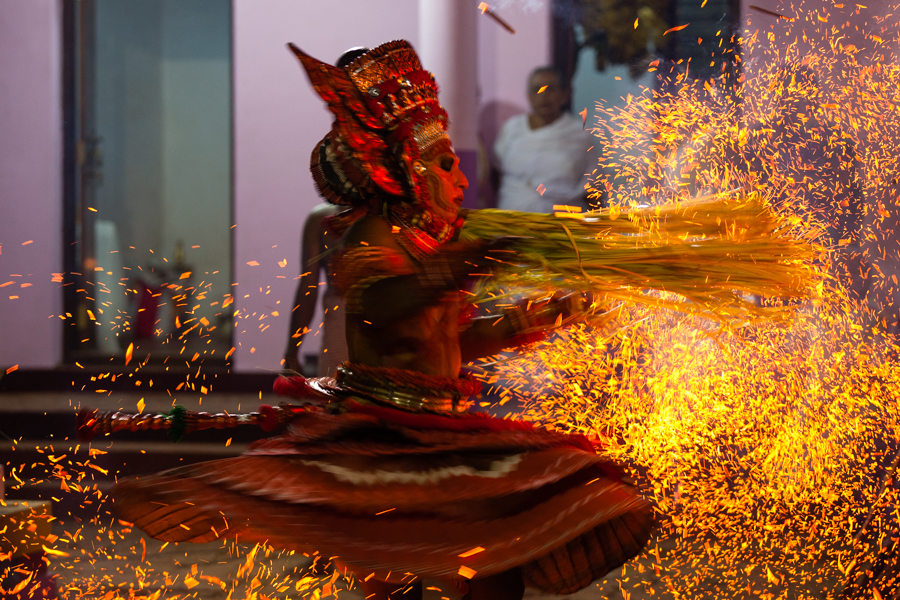
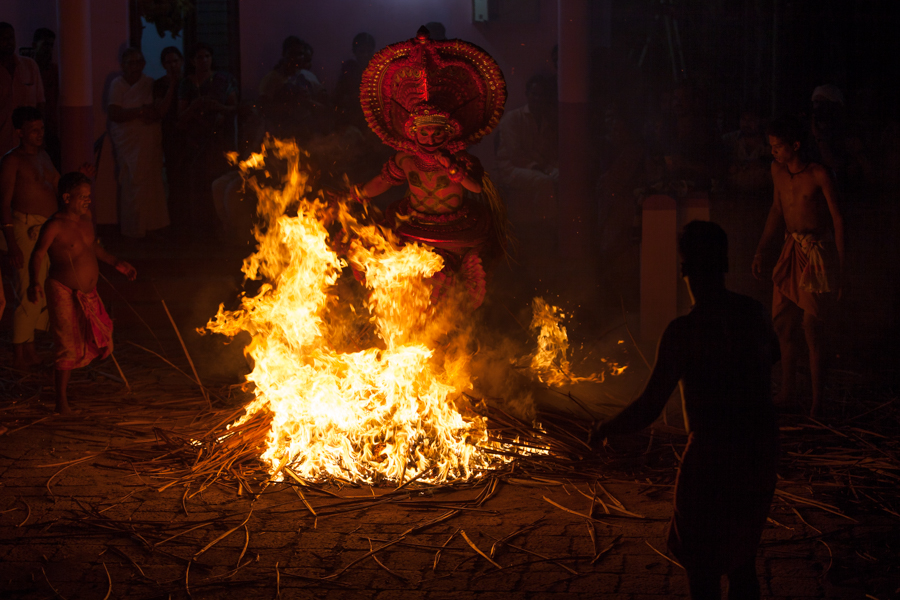
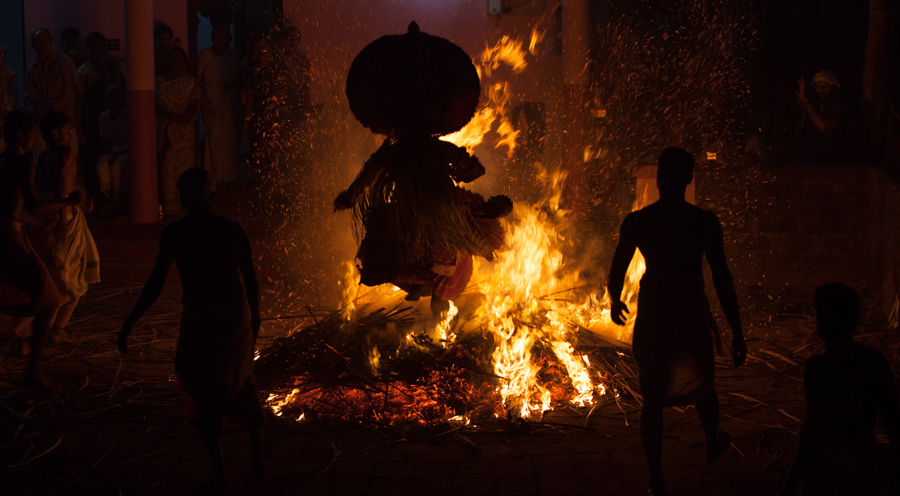
Theyyam

That evening, I headed to Bekal Fort to spend some time shooting the beach and the fort, trying to take advantage of a few rocky stretches that would aid me with some low-light compositions. After randomly clicking for a few minutes along the beach, I stepped in to an area where the fort stretched close to the sea along an elevated shoreline. It is here that I wanted to spend most of the evening, and rested the tripod on the rocks as I worked my compositions. As I walked on the rocks looking for my shots, I heard a low thud behind me and turned around to check the source of the sound. I had not placed the tripod on a secure ground, and it had now fallen off along with the camera. Rushing to it, a quick inspection revealed a broken LCD, but rest of the camera was working well. I could shoot pictures, but would not know how it looked till I downloaded it on the computer.

Bekal, Kasargod
One of the last images from the trip

I shoot with just one camera body, and it was like a panic situation at the moment. I thought about the next possible steps, and my options weren’t too many. Obviously, there would be no one in Kasargod who can fix the camera, or lend me another one for a few days. I had to choose to continue shooting without the LCD, or abort the mission. Since this was a photography trip, I did not find it appealing to continue travelling without worrying about serious photography. And I knew I can’t get the best from my camera without a live preview. After pondering over it for some time, I decided to abandon mission and head back to Bangalore. The next day was spent retracing the road I travelled on, without the images I was hoping to carry back with me.

Bekal Fort
The last image from the broken camera

A few days later, Canon service presented a shockingly high estimate to replace the LCD screen. But I did not have much choice here – I can’t afford a new body at the moment, and there is no way I could do without a camera. The silver lining – I had insured the body only a few weeks ago, and will hopefully get at least half the expenses of repairing it!

And to end the story, I did not feel a bit dejected or unhappy as I cut the journey short and rode back to Bangalore. The camera, having lived with me for a long time compared to average life of an evolving digital camera, had been serving me well, and a small incidence like this is inconsequential. May be I shall return to shoot Theyyam again next year.

Subscribe to India Travel Blog | Email This Post Email This Post | 3 Comments

Related Posts

  • No Related Post

Posted in kerala

Photo Essay – Images of Theyyam

March 16, 2009

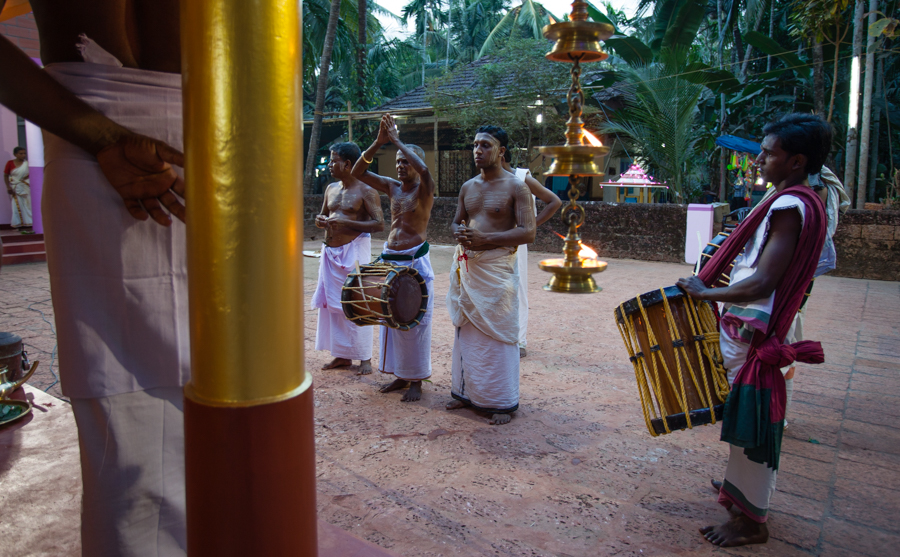
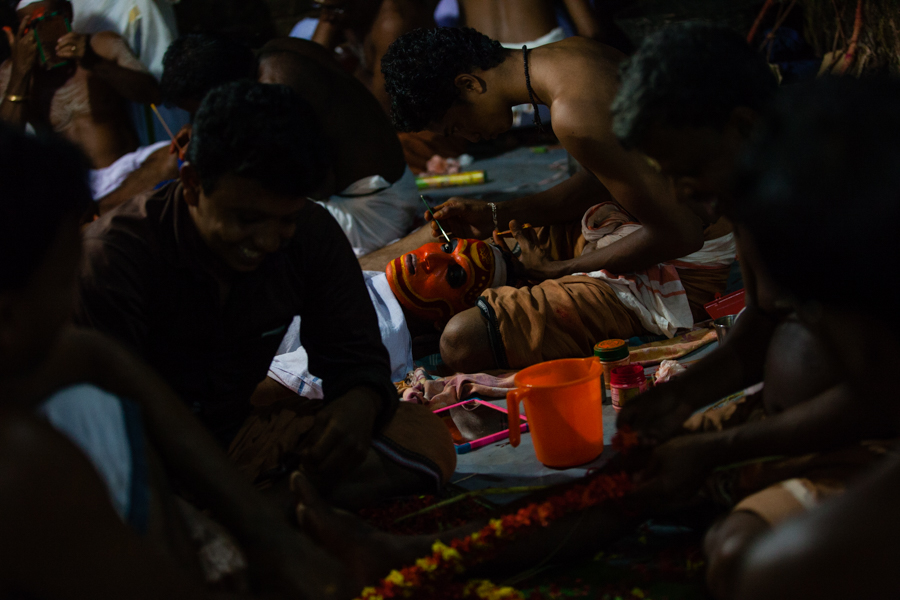
To begin with a short introduction, Theyyam is a ritual performed in the temples of north Kerala, in the districts of Kannur and Kasargod. The deity of the temple is believed to occupy the elaborately dressed performer, and speak through him during the performance.

Theyyam

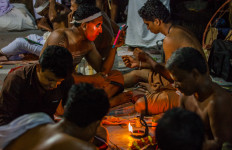
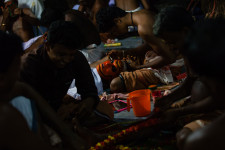
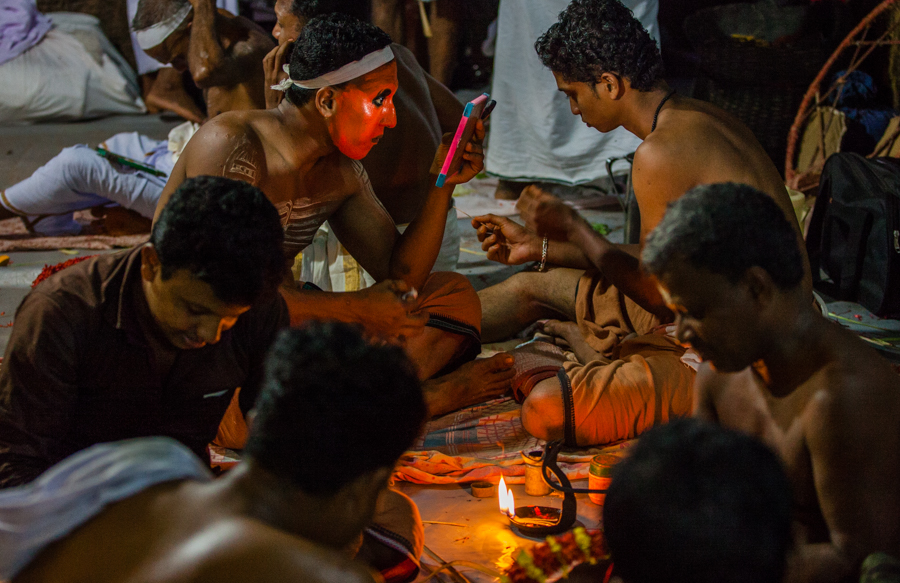
Getting the artist ready for the performance is a long process in itself. People arrive early to see the Theyyam being dressed.

Theyyam

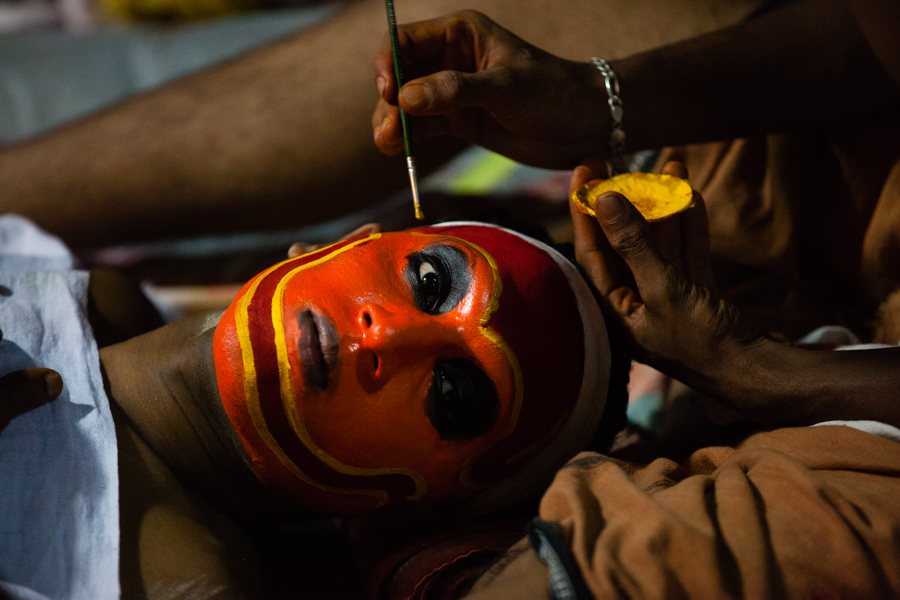
It can take a couple of hours just to get the performer ready.

Theyyam

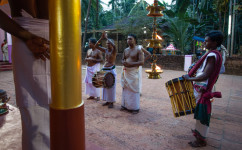
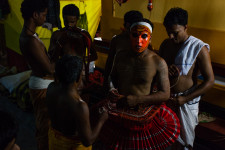
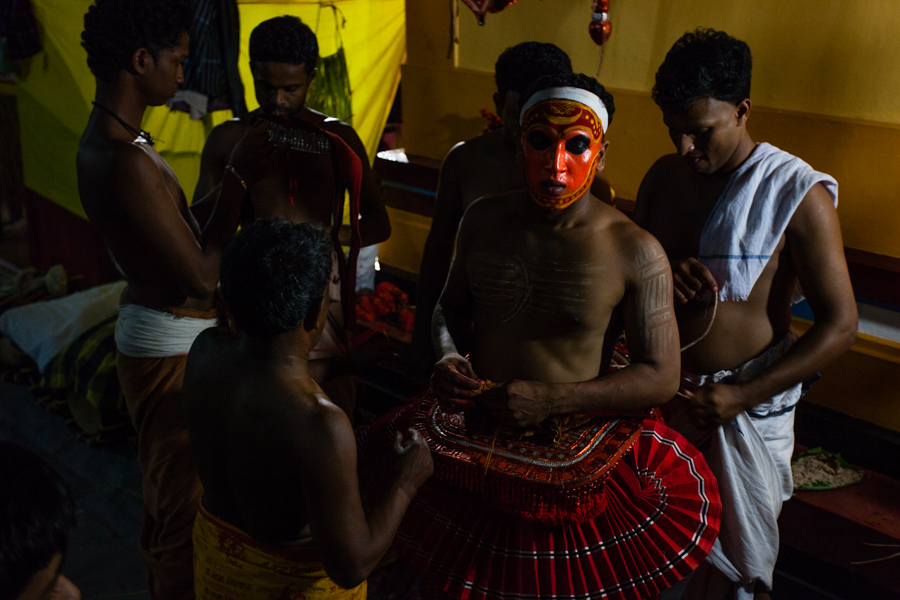
The last stages of dressing is accompanied with high paced music from the drums. The instrument in the picture is called ‘chanDe’ in Kannada, also used in Yakshagana performances. Anyone knows the Malayalam name?

Theyyam

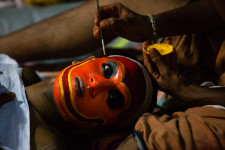
The complex attire with multiple stages of clothing and ornaments requires help from many assistants.

Theyyam

Theyyam

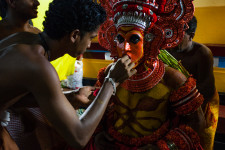
One of the boys who assists the Theyyam through the performances looks at the artist and smiles after completing the decorations.

Theyyam

In full glory!

Theyyam

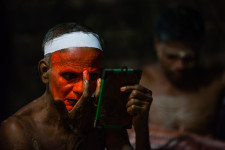
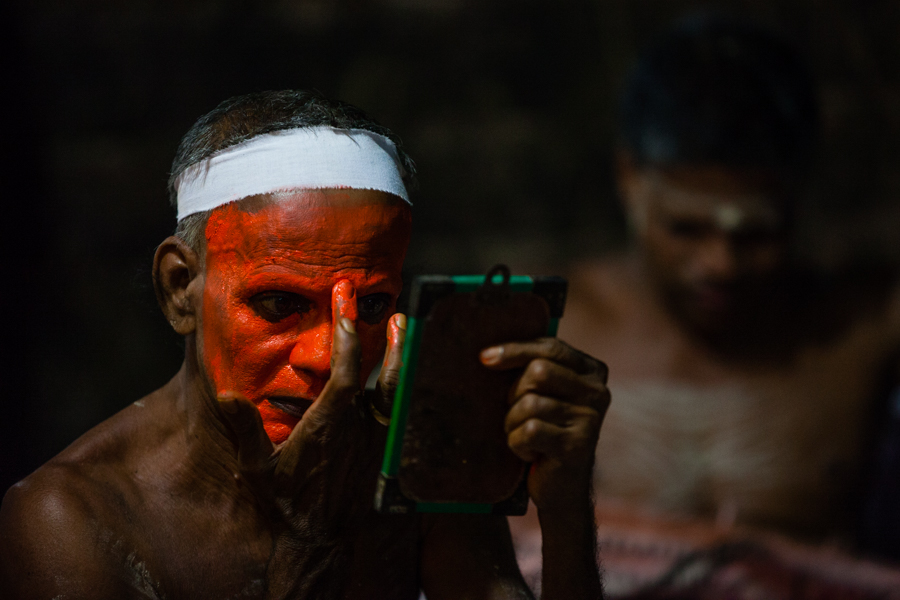
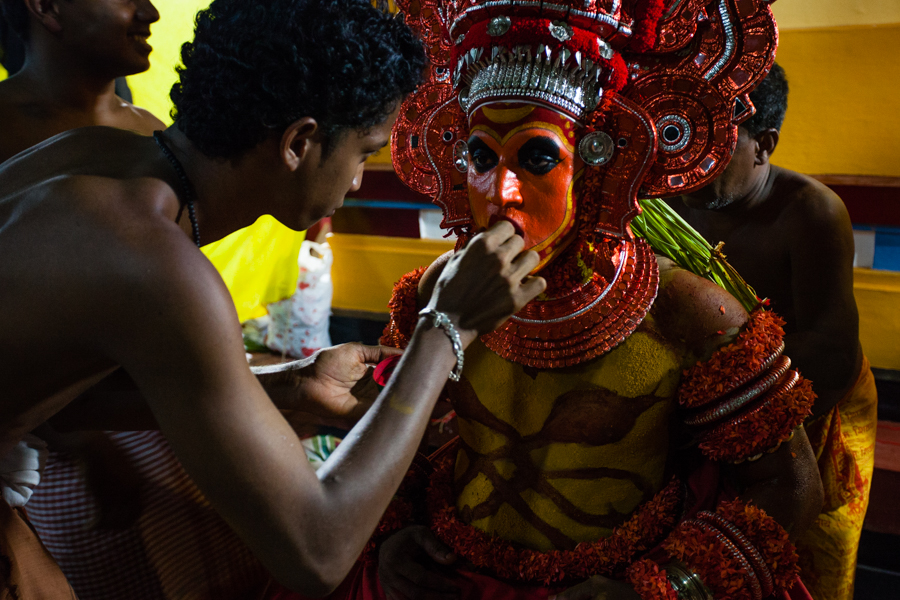
Perfecting raudra rasa? The artist looks at himself in the mirror. The kumkum(red powder) added around the lips at the last moment adds to the mood remarkably.

Theyyam

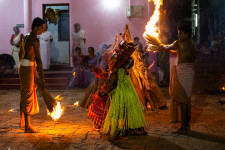
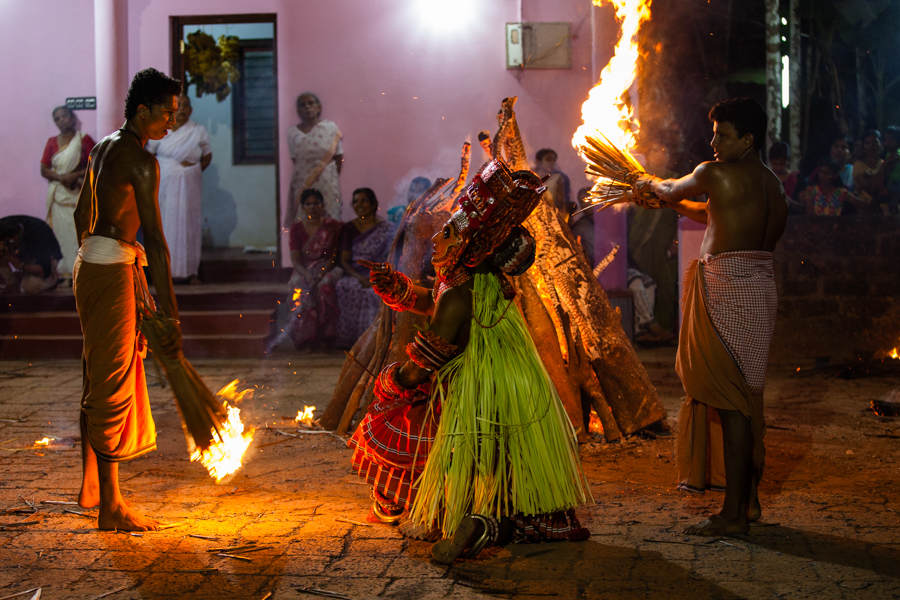
During the performance..

Subscribe to India Travel Blog | Email This Post Email This Post | 8 Comments

Related Posts

  • No Related Post

Posted in culture, kerala

Photo Essay: Padmanabhapuram Palace

September 25, 2008

On a fine sunny morning, I took a local bus from Kanyakumari and arrived at the leafy environs of Padmanabhapuram Palace. The area around the palace is thickly covered with coconut groves on all sides, and sunlight hardly reaches the ground except where the landscapes are interrupted by tarmac.

The entrance to the palace is predictably surrounded by eateries and souvenir shops. Buying keepsakes is not something I am used to, but nevertheless, ingenious use of coconut shells to create monkeys and Ganeshas succeeded to garner my attention. A short inspection of the surroundings, and I zeroed in on an ancient looking eatery for breakfast.

Padmanabhapuram Palace

The dosa at the breakfast place, served with a red chutney with plenty of coconut(do they ever make anything without coconuts in these parts?) was delicious enough for me to go for a second helping. And I was fed with another dose of coconut by a tender coconut vendor at the doors of the palace.

chai shop

The palace dates back by 400 years, when it was built by the renowned Travancore king Marthanda Varma. But its glory days lasted less than a century, as his successor Dharma Raja decided to move his capital to Thiruvananthapuram. Padmanabhapuram to Thiruvananthapuram? I think Travancore kings loved long names!

The first sight of the palace is unfortunately the least impressive. Soon after I walked through the entrance, I was beginning to doubt if the trip was worth the effort.

Padmanabhapuram Palace

The first hall – a courtyard where the king met his visitors – has been praised to no end by palace guides on location as well as the guidebooks, but doesn’t leave a big impression. A lamp, a chair supposedly gifted by a Chinese visitor and a plain stone bed hardly make a mark.

But proceeding further, impressions of the palace change as quickly as it was built up. The mantrasala – the discussion chamber of courtiers has an impressive display of light and shade created by wooden window grills. The colorful windows have placeholders to store perfumes that spread in the room when the wind blows in. The dark and hard flooring of the room and rest of the palace have a superb finish that almost match marbles in their finesse.

Padmanabhapuram Palace

The palace has an army of employees serving as tour-guides, whose services are included in the entry fee. A few years ago, a guide would escort each group of visitors through the palace and explain it all from beginning to end. That meant, in days when there are lot of visitors, people had to be rushed through the palace so that everyone can be attended to, and leaving most tourists unhappy. The Kerala archeological department worked on an ingenious solution to the problem: now they have placed two guides in every section of the palace, filling the palace with guides who stay put in their location and brief the tourists. Each section of the palace has clearly marked directions aiding the visitors to find their way through the maze of halls and rooms in the palace.

Walking further from Mantrasala, the arrow marks lead me to the long dining hall where Brahmins once dined in hundreds, thanks to the benevolent king. Huge jars and cauldrons stored at a corner of the hall tell the story of food that was probably cooked in tonnes.

Padmanabhapuram Palace

First floor of the dining hall gives excellent view of sections of the palace towering with maroon colored tiled roof, sloping steeply. Walking down from here to a pooja hall called ‘mother palace’, I am once again impressed with ornate carvings of wood, smooth flooring and airy windows with wooden bars. A pillar with intricate woodwork charms me with its carvings of plantains and floral patterns.

Padmanabhapuram Palace

Padmanabhapuram Palace

Padmanabhapuram Palace

Further ahead is Upparika Mahal – the four-storied tower that served as the king’s quarters. A narrow staircase leads up to the king’s bed room in second floor. Further up is a room with frescoes that is out of bounds to visitors. Kerala Archeological Department has closed this room to help preserve the paintings, but how-ever, tourists are always told that the rooms are under renovation. A few poor quality copies are kept in the palace museum, but they are barely good enough to indicate that the originals are excellent paintings, and leave you with a longing to see them.

Padmanabhapuram Palace

I pass from here to the airy women’s quarters, and then to the long corridors of guest-rooms that now host some beautiful old paintings of the life and times of Marthanda Varma. The paintings – including coronation of the king, a plot to kill his majesty, war scenes – are well preserved, even when the brand new tiny wooden labels under the paintings have already fallen off!

Just besides the guest-rooms is a green open area with lush grass and tall coconut trees, and a pond at a corner of the palace. I spent a long time standing in a balcony overlooking the pond, observing the fish in the water and a cormorant feeding on them(Here is a separate story on the pond).

Padmanabhapuram Palace

The signs helping visitors to find their directions lead me from here to Navarathri Mantapa and Saraswati Temple. These are carved from stone, a significant detour from the wooden structures in rest of the palace. The Mantapa, the place for performances in the palace, is adorned with carved pillars and a floor that is polished well enough to create reflections.

Padmanabhapuram Palace

I had almost lost track of time and was engrossed in the impressiveness of the palace. I realized having spent many hours inside only when the signs leading out of the Mantapa took me back to the entrance, indicating end of my trip. Hunger pangs then lead me out of the palace, and further down the road for yet another helping of the delicious dosa.

Padmanabhapuram Information

Visit to the palace is best done as a day-trip from either Kanyakumari or Trivendrum.

How to reach: To get to the palace, take a Trivendrum bound bus from Kanyakumari(or the other way), and get down at Thuckalay town. You can hire an auto-rickshaw from Thuckalay to the palace, which is 3km away.

Nearest major train stations are at Trivendrum and Nagercoil, and the nearest airport is at Trivendrum.

Subscribe to India Travel Blog | Email This Post Email This Post | Leave a Comment

Related Posts

  • No Related Post

Posted in heritage, kerala, tamil nadu
« Previous Entries
Newsletter Signup

RSS

On Twitter: twitter.com/indiatravelblog
On flickr: Travel - Photography Group


Complete List of Destinations
_______________________________________

Plan Your Holiday


Book or request for details for customized holidays and packages with our partners 'Holiday Mantra' in the above destinations or anywhere else in the country. Ph: +91-9482643109
  • Your Name

    Your Email

    Telephone Number

    Destination/Property you intend to visit

    Subject

    Your Message (please indicate the name of the accommodation you want to book, location, dates, number of people and any preferences you have)

    Please enter the text you see in the picture

    captcha

    ajax loader

_______________________________________

about:me
Arun
Travel Writer and Outdoor Photographer
Bangalore, India.
contact me for queries, travel writing and photography assignments
My Freelance Travel Writer and Photographer Resume

I also write at

iVinca Travel Blog
ghumakker
desicritics
_______________________________________

Links: Travel Blogs and Sites
_______________________________________

Featured

  • Complete List of Destinations
  • Weekend Getaways from Bangalore
  • Places around Bangalore
  • Driving from Bangalore to Goa
  • Tour of Coorg
  • Auli
  • Sikkim
  • Driving from Manali to Leh
  • Leh, Ladakh
  • Rajasthan Tour
  • Travel to North East India

Categories

  • Others
    • book review
    • calendar
    • meta
    • misc
    • newsletter
    • travelwise
  • photos
  • Regions
    • bangalore
    • himalayas
    • ladakh
    • lahaul and spiti
    • sahyadri
  • States
    • arunachal pradesh
    • assam
    • himachal pradesh
    • Jammu and Kashmir
    • karnataka
    • kerala
    • Madhya Pradesh
    • meghalaya
    • north east
    • north-east india
    • rajasthan
    • Sikkim
    • tamil nadu
    • tamilnadu
    • Uttar Pradesh
    • uttarakhand
  • Themes
    • beach
    • birds
    • culture
    • driving
    • heritage
    • hills
    • humour and travel essays
    • monsoons
    • mountains
    • nature
    • picnic
    • rivers
    • trek
    • walks
    • wildlife
  • travel photography
  • Uncategorized
  • video

_______________________________________

Our holiday planning partners - Holiday Mantra
_______________________________________

Travel Blogs - Blog Top Sites Visit blogadda.com to discover Indian blogs
newsletter powered by Dada Mail

travel home
.


© 2004-9 paintedstork.com All rights reserved. Contact